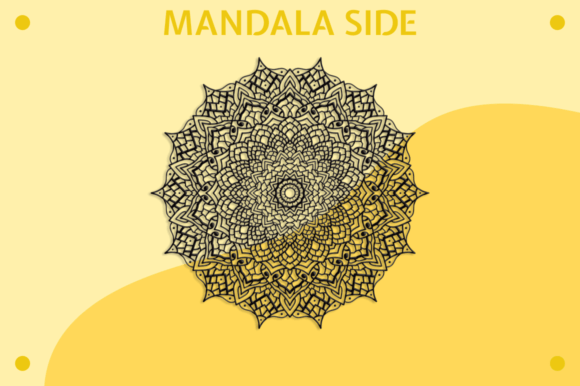
Mandala Side: A Versatile Tool for Creative Projects and Mindful Design
Mandala Side has become a go-to resource for creators, designers, and enthusiasts looking to incorporate intricate circular patterns into their work. Whether you're designing a Meditation Poster, Adult Coloring Book Page, or even a Wedding Invitation, the Mandala Side offers a unique blend of artistic expression and functional design. This article explores how to effectively use Mandala Side, highlights common pitfalls, and provides actionable tips to ensure your creative projects stand out.
Understanding Mandala Side and Its Uses
Mandala Side refers to the side or edge elements of mandala designs that often feature repeating geometric shapes, floral motifs, or abstract patterns. These sides are not just decorative; they serve as essential components in creating balanced and harmonious compositions. From Amazon KDP Interior layouts to Tattoo and Henna designs, Mandala Side can enhance the visual appeal and cultural significance of your work.
For instance, when designing a Meditation Poster, the Mandala Side can frame the central mandala, guiding the viewer's eye inward and promoting a sense of calm. In an Adult Coloring Book Page, it adds complexity and interest, making the page more engaging for users.
Common Mistakes When Using Mandala Side
While Mandala Side is versatile, several mistakes can hinder its effectiveness. One common error is using low-resolution images, which can lead to pixelation and poor print quality. Always ensure you have high-resolution files, ideally 300 dpi, to maintain clarity and sharpness in your final output.
Another frequent mistake is neglecting the safe area margins when preparing files for printing. For example, if you're creating a 8.5 X 11 inch Portrait image, you should leave at least 0.375 inch margins on all sides to prevent important design elements from being cut off during the printing process. Failing to do so can result in a less professional appearance and may require costly reprints.
Choosing the Right Mandala Side for Your Project
Selecting the appropriate Mandala Side for your project involves understanding the context and purpose of your design. For Business Cards, a minimalist Mandala Side with subtle floral accents might be more suitable than a complex, highly detailed pattern. On the other hand, Greeting Cards and Wedding Invitations can benefit from more elaborate designs that reflect the theme and tone of the event.
It’s also crucial to consider the intended audience. If you're targeting a younger demographic, vibrant colors and dynamic patterns may resonate better. However, for a more mature audience, such as professionals or educators, a refined and elegant Mandala Side could be more effective.
How to Avoid Common Pitfalls
To avoid common pitfalls, start by researching the specific requirements of your project. For example, if you're designing for Amazon KDP, ensure your files meet the platform's guidelines regarding size, resolution, and file format. PNG Transparent Background files are ideal for most digital uses, but always check if your project requires a different format.
Additionally, take time to review your design before finalizing it. Ask yourself: Does the Mandala Side complement the overall composition? Is the pattern consistent throughout? Are there any distracting elements that could detract from the main message or image?
Practical Tips for Using Mandala Side Effectively
Here are some practical tips to help you make the most of Mandala Side:
- Experiment with Layers: Use layers to separate the Mandala Side from the main design elements. This allows for greater flexibility in editing and adjusting the design without affecting the entire composition.
- Use Vector Illustrations: Vector-based Mandala Sides offer scalability without loss of quality, making them perfect for both digital and print applications. They are especially useful for Fashion Designs and Background Patterns where precision is key.
- Check for Consistency: Ensure that the Mandala Side maintains a consistent style and color palette throughout your project. This helps in creating a cohesive and professional look.
- Test Different Sizes: Before finalizing your design, test it in different sizes to see how the Mandala Side appears. This can help identify any issues with scaling or proportion.
Conclusion
Mandala Side is a powerful tool that can elevate your creative projects, whether you're working on a Meditation Poster, Adult Coloring Book Page, or Wedding Invitation. By avoiding common mistakes and following best practices, you can ensure that your designs are not only visually appealing but also technically sound. With careful planning and attention to detail, Mandala Side can become an invaluable asset in your creative toolkit.